FAQ
Optical oxygen analyzers for natural gas: common questions
What is an optical oxygen analyzer for natural gas?
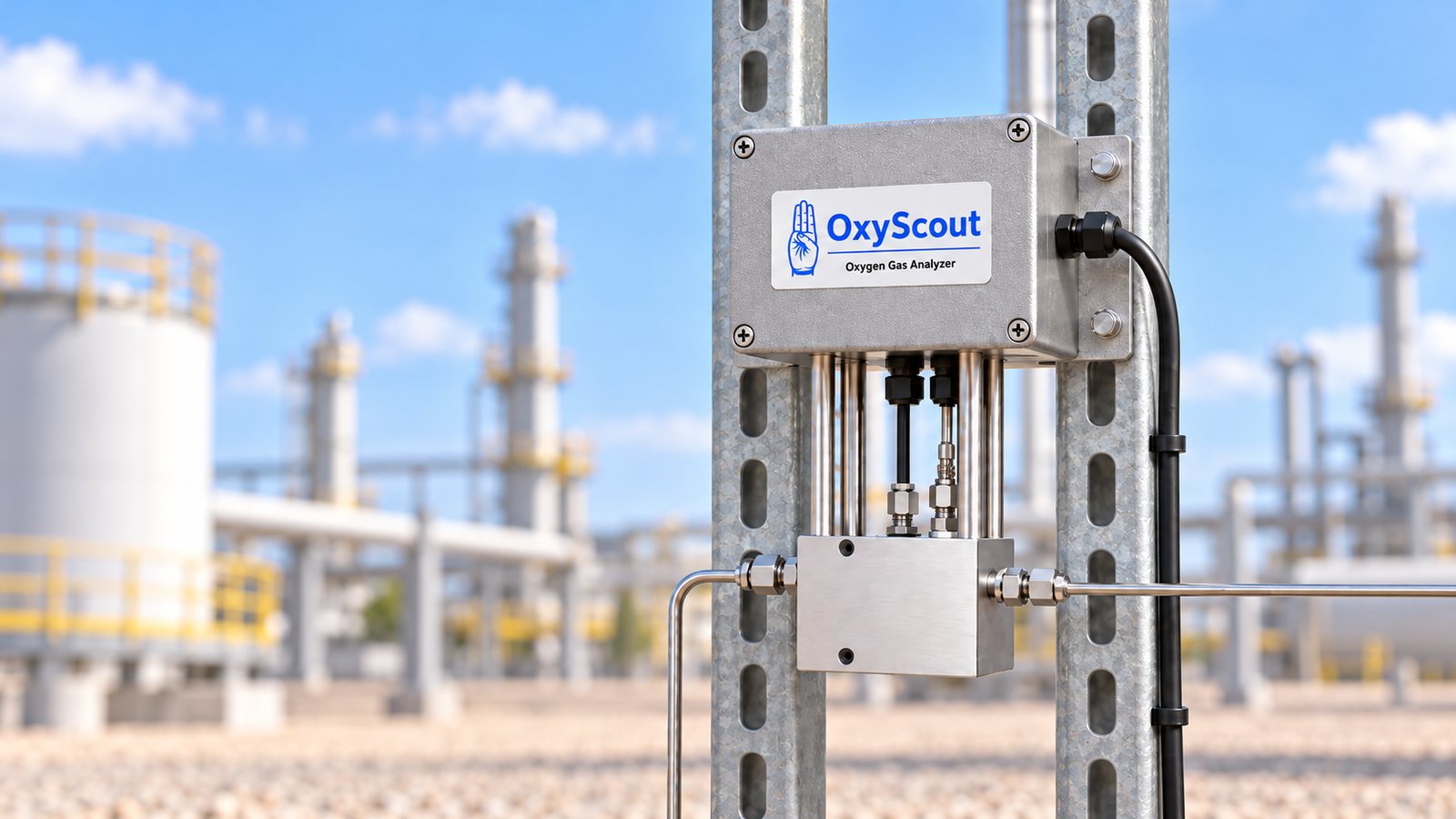
An optical oxygen analyzer measures O₂ with a fully optical sensor instead of an electrochemical (galvanic) cell. OxyScout, from Standard Sensors, measures trace (0–50 ppm, 0–1000 ppm) and percent (0–1 %, 0–10 %, 0–21 % by volume) oxygen continuously in natural gas, with no electrochemical cells to replace.
Why measure oxygen in natural gas?
Produced gas leaves the reservoir essentially free of oxygen, so any O₂ in the stream is air that got in at the surface: through tank thief hatches and VRU equipment, compressor rod packing and shaft seals, wellheads running at or below atmospheric pressure, or gathering-line fittings. Oxygen accelerates corrosion, can form a combustible mixture, and can put gas out of spec with a pipeline.
Where should the analyzer be installed?
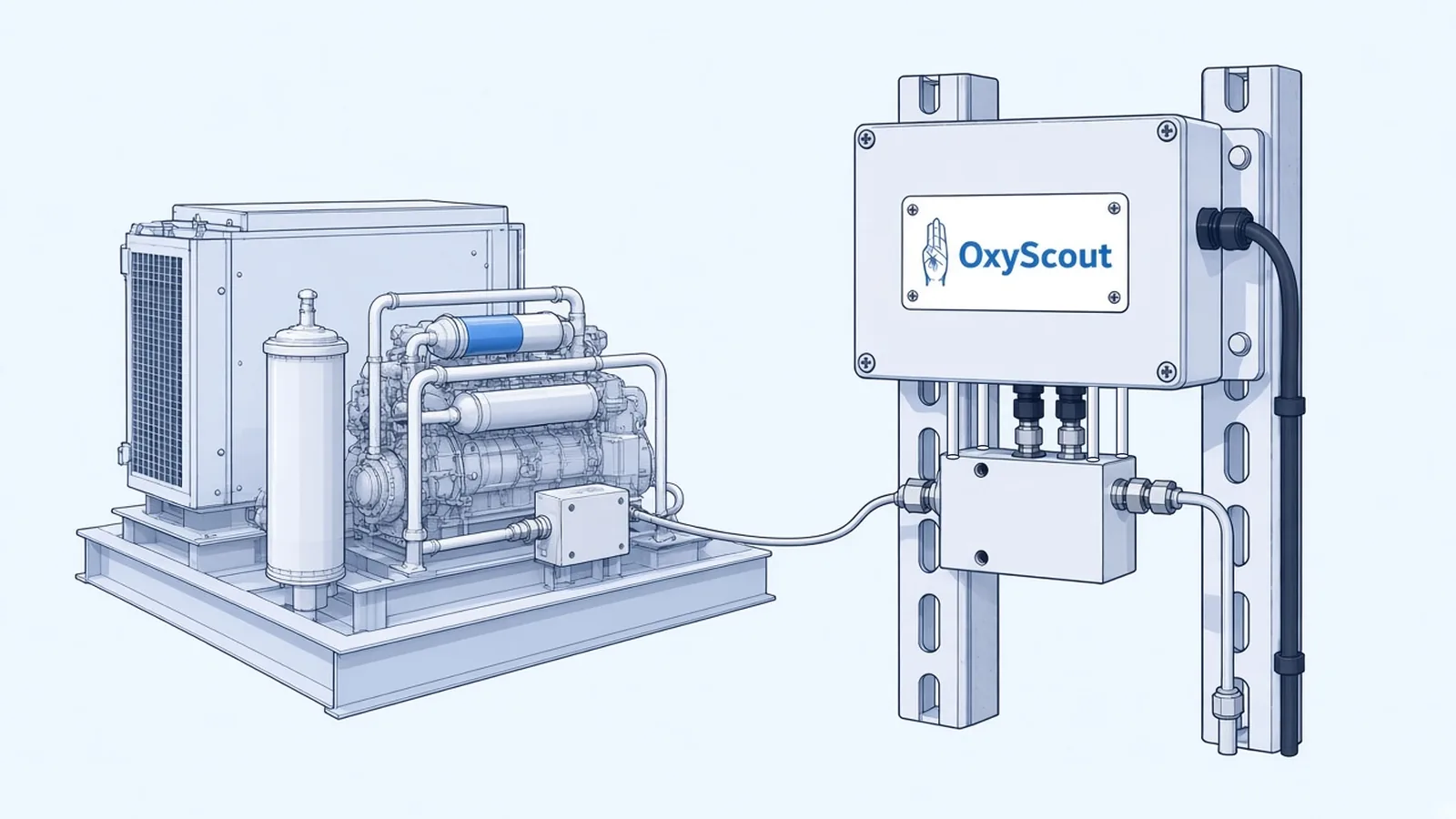
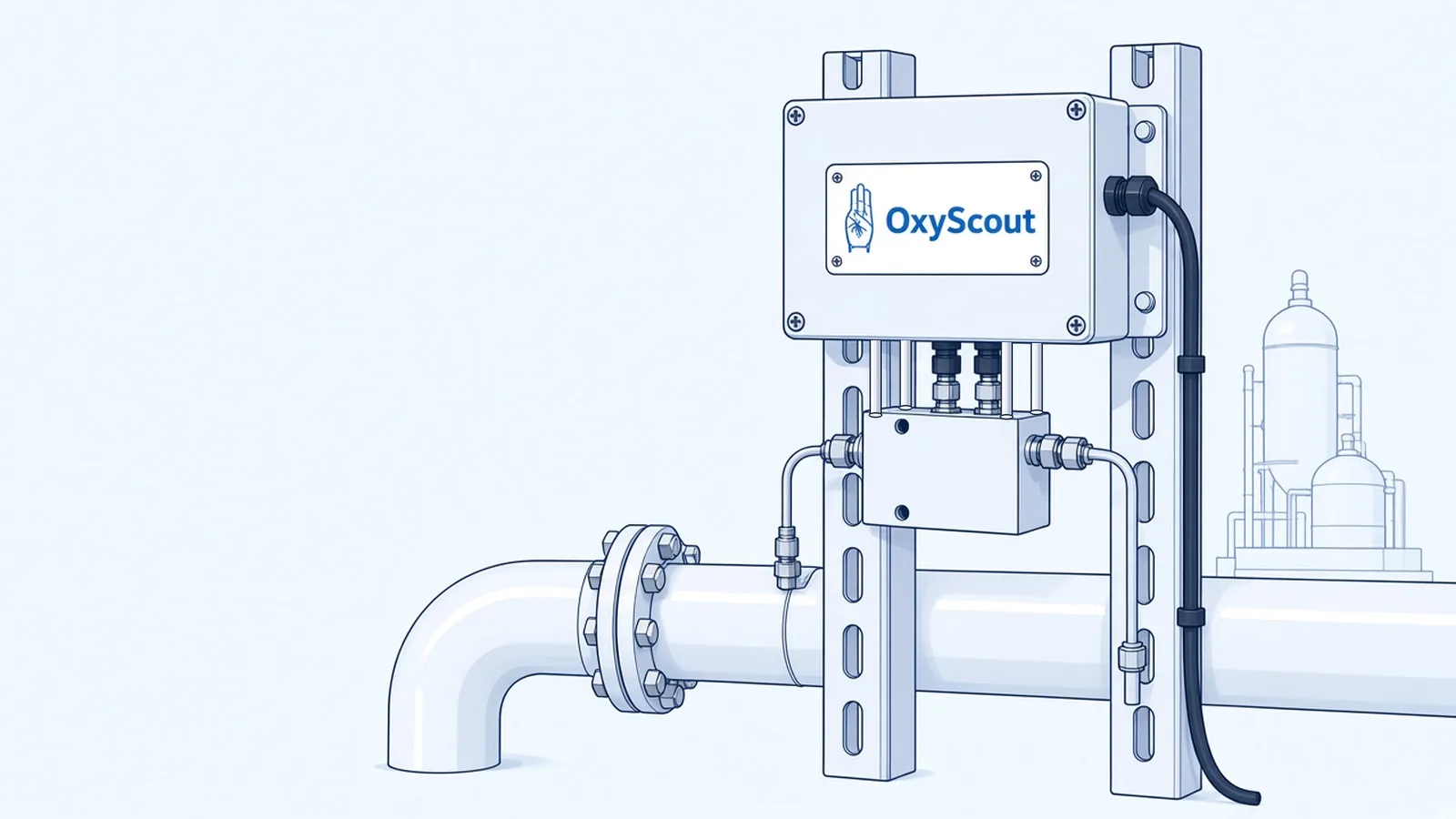
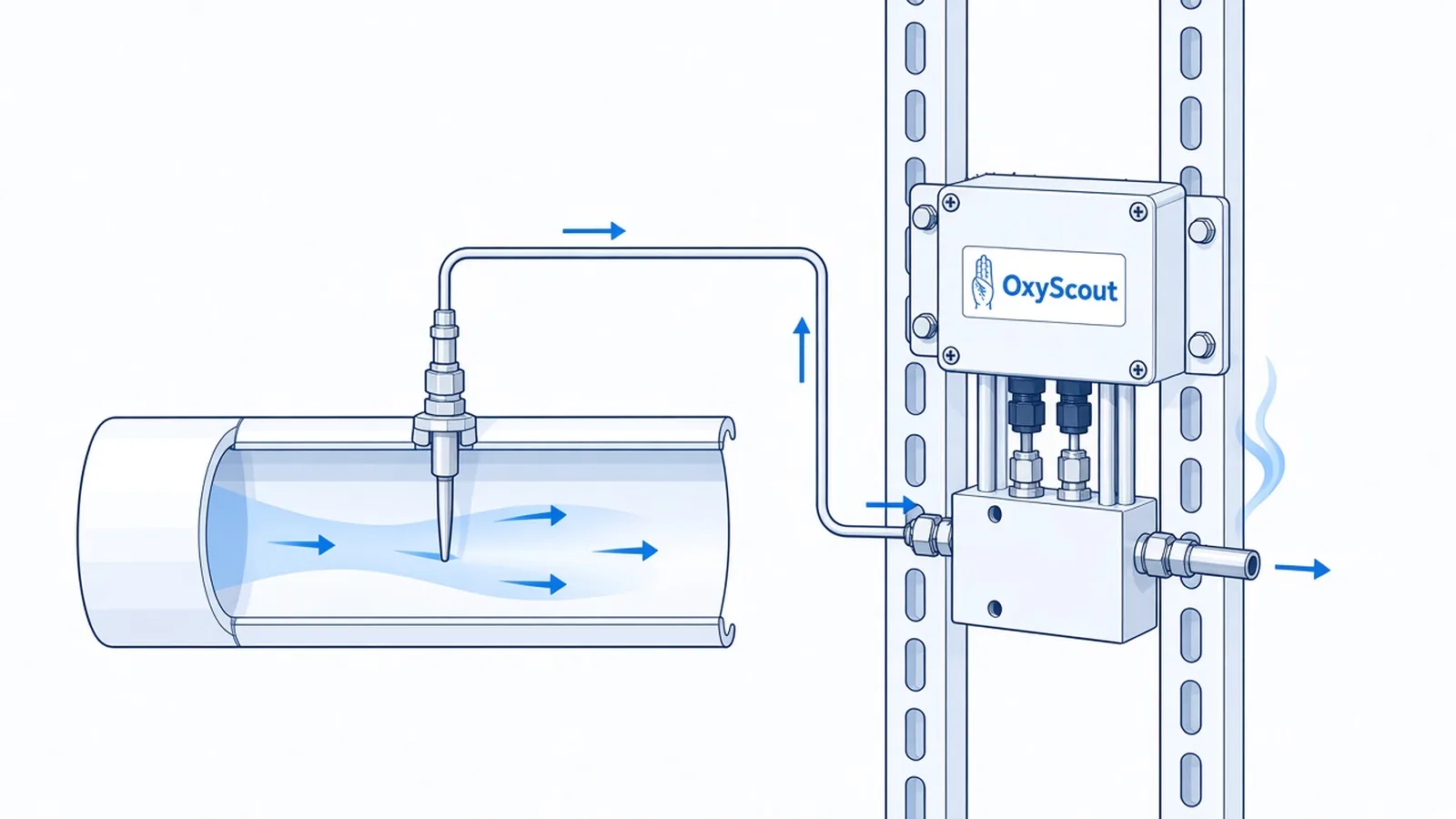
Put it where air enters or where the spec is enforced. Typical locations are the vapor line between the separator and the VRU compressor, the compressor discharge line, the wellhead or production sample point, and the fence line at custody transfer. Using several points lets you trace a high reading downstream back to its source.
How is it different from an electrochemical oxygen analyzer?
An electrochemical (galvanic) cell is consumed as it measures and has to be replaced, and it can be affected by H₂S, CO₂ and other gases. OxyScout has no electrochemical cell to replace and no cross-sensitivity or poisoning from H₂S, CO₂ or the other gases that plague galvanic cells.
What ranges, outputs and power does it use?
The ranges are 0–50 ppm and 0–1000 ppm by volume (Ultra-Trace and Trace), and 0–1 %, 0–10 % and 0–21 % by volume (Percent). The outputs are a 4–20 mA loop (current sink) and RS-485 Modbus RTU. The analyzer runs on 9–36 VDC and draws 35 mA plus the current used by the analog outputs.
What hazardous areas and environments is it designed for?
OxyScout is engineered for Class 1 Division 2 (Zone 2) hazardous areas and has an IP67 enclosure for dust and water protection. Process and ambient temperature is 0 to 50 °C. The analyzer is rated up to 250 psi without the flowmeter installed. Higher ratings are available if a regulator is installed upstream. Extreme-heat and extreme-cold enclosures are available options.
Is Standard Sensors only for the Permian Basin?
No. Standard Sensors is based in Montgomery, Texas, and builds OxyScout for natural gas and oil and gas operators across U.S. basins.
How do I get a quote or talk to an engineer?
Book a 30-minute meeting to review your application and get a quote, or call (936) 259-4643 or email [email protected].